
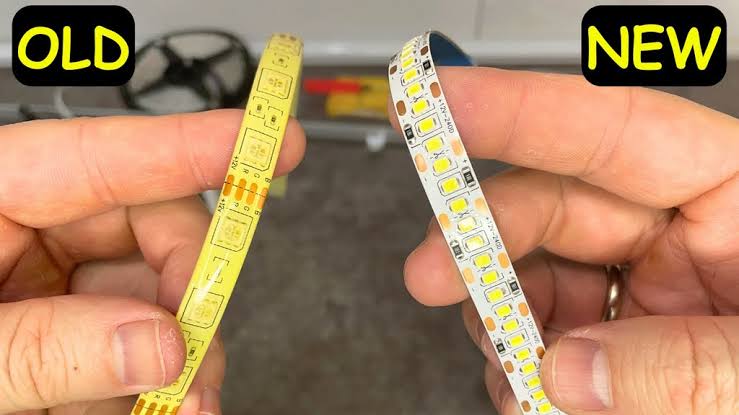
How To Dispose Of LED Strip Light
LED strip lights are a popular choice for home lighting, gaming setups, kitchens, bedrooms, and outdoor decorations. They’re energy-efficient, versatile, and generally last a long time. But what happens when they stop working, become damaged, or simply need replacing?
Many people assume that old LED strips can go straight into the household trash. However, LED strip lights are electronic waste (e-waste), and recycling them through an appropriate electronics collection program is the recommended disposal method.
Can You Throw LED Strip Lights in the Trash?
The best answer is no. LED strip lights should generally be taken to an appropriate electronics recycling or collection program rather than placed in ordinary household garbage.
LED strip lights contain several materials, including:
- Copper conductors and solder connections
- LEDs and other electronic components
- Flexible printed circuit boards
- Plastic or silicone coatings
- Adhesive backing
- In some products, small control chips or integrated circuits
Unlike fluorescent light bulbs, typical LED strips do not contain mercury. However, they still contain electronic components and materials that are better handled through dedicated recycling systems.
In fact, UK government guidance explicitly identifies LED tape and strips sold to end users as electrical and electronic equipment covered by its WEEE framework.
Quick disposal reference
| Component | Recommended disposal |
|---|---|
| Flexible LED strip | Electronics recycling |
| RGB or smart LED controller | Electronics recycling |
| Power adapter | Electronics recycling |
| Remote control | Electronics recycling; remove batteries |
| Batteries | Dedicated battery collection |
| Aluminum LED channel | Metal recycling, if accepted |
| Clean cardboard packaging | Paper/cardboard recycling |
| Adhesive backing or silicone scraps | Usually general waste, subject to local rules |
How to Dispose of LED Strip Lights Safely: Step-by-Step

- Step 1: Disconnect the power supply
Turn off the lights and unplug the power adapter. If the strips are hardwired to household electricity, switch off the appropriate breaker and have a qualified electrician disconnect them when necessary.

- Step 2: Remove the LED strip carefully
Slowly peel the strip away from the wall, furniture, or mounting channel. Avoid forceful pulling that could damage the surface or leave sharp exposed connections.

- Step 3: Separate detachable components
Disconnect the power adapter, RGB controller, extension cables, and remote control where practical. Remove accessible batteries for separate recycling.

- Step 4: Prepare for collection
Loosely coil the strip without crushing or sharply bending it. Keep loose electronic components together in a small bag or box. Cover exposed contacts on disconnected batteries according to battery recycling guidance.

- Step 5: Take it to an appropriate recycling facility
Contact a local electronics recycler or municipal collection facility and confirm that it accepts flexible LED strips. Not every light-bulb collection point accepts strips, controllers, or adapters.
Safety tip: Avoid burning, shredding, or melting LED strips at home. Do not put loose electronics into curbside recycling bins unless your local collection program explicitly accepts them.
Where Can You Recycle LED Strip Lights?
Your options depend on your country, city, and the collection programs available nearby.
- Electronics recycling centers
Dedicated e-waste recycling facilities are usually the most suitable choice. They may accept old lighting equipment, small circuit boards, cables, and power adapters.
- Hardware and lighting retailers
Some electronics and home-improvement stores offer take-back programs for electrical products. Check with the retailer before visiting because some accept only light bulbs, while others accept a wider range of electronics.
- Municipal waste collection programs
Certain municipalities run special e-waste collection days or operate permanent drop-off locations.
- Manufacturer take-back programs
Some manufacturers or distributors offer recycling and take-back arrangements, although the availability and accepted products vary.
Recycling resources by region
| Region | Where to start |
|---|---|
| United States | EPA electronics recycling guidance |
| United Kingdom | Recycle Now locator |
| European Union | Municipal WEEE collection centers or electronics retailer take-back programs |
| Canada | Provincial electronics stewardship programs |
| Other countries | Local electronics recyclers or municipal waste authorities |
The US EPA recommends choosing properly certified electronics recyclers when possible, including facilities certified under R2 or e-Stewards standards.
Can LED Strip Lights Be Recycled?
Yes, LED strips can enter electronics recycling streams, although the recoverable materials and actual processing methods depend on the recycling facility.

Recycling may involve the recovery of:
- Copper: From conductive traces and wires.
- Aluminum: From mounting channels and heat-dissipating profiles.
- Other metals: From electronic parts and connections.
- Plastics: Some rigid plastic components may be recoverable, depending on the facility.
Flexible LED strips can be more difficult to recycle than conventional electronic equipment because thin metal conductors are bonded to polymers, adhesives, and sometimes silicone or waterproof coatings.
This means that being accepted for electronics recycling does not guarantee that every part of the strip will be recovered.
Nonetheless, separate collection helps keep electronics in an appropriate waste-treatment system rather than sending them directly to landfill.
Can You Reuse Old LED Strip Lights?
Before disposing of an LED strip, consider whether it can still be used.
A fully functional strip may have a useful second life in another room or project. Some partially functioning strips can also be repaired or shortened, provided they are designed for cutting.

Bookshelf lighting
- Reuse short working sections for decorative lighting.

Desk lighting
- Create subtle ambient lighting behind your workspace.

Closet lighting
- Install functional low-voltage strips in storage spaces.

DIY decorations
- Use leftover sections for small decorative projects.
Important precautions when reusing LED strips
Only cut LED strips at the designated cutting marks, and only if the manufacturer permits cutting.
Check that the power supply voltage matches the strip requirements, typically 5V, 12V, or 24V for low-voltage products. Never connect a low-voltage LED strip directly to household mains electricity.
Do not reuse strips with burned areas, melted insulation, serious water damage, or exposed conductors that cannot be safely repaired.
How to Dispose of Different Types of LED Strips
Not every type of LED strip requires identical preparation.
| Type | Special considerations |
|---|---|
| Standard 12V or 24V strip | Disconnect its adapter and take the strip to e-waste recycling |
| RGB/RGBIC strip | Include damaged or unwanted controllers in e-waste |
| Waterproof LED strip | Leave silicone coating intact unless the recycler requests otherwise |
| USB-powered LED strip | Recycle the strip and cable as small electronics |
| Battery-powered strip | Remove accessible batteries and recycle separately |
| Mains-powered LED tape | Have an electrician disconnect hardwired components if needed |
Waterproof LED strips often have silicone or other protective coatings that make material separation more complicated.
For these products, you should not attempt to burn off, dissolve, or scrape away the coating to recover copper.
How to Dispose of LED Strip Power Supplies and Controllers
The LED strip itself is only part of the lighting system.
Power supplies, dimmers, controllers, and remotes should also be handled responsibly when they are no longer usable.
Power adapters: These contain electronic components and should go to an appropriate electronics recycling facility.
RGB controllers: They often contain circuit boards, small processors, and communication modules. Dispose of them as electronic waste.
Remote controls: Remove the batteries if possible. Recycle the remote through an electronics collection program and the batteries through an appropriate battery program.
Reusable extension cables: Keep functional cables for future projects, provided they are undamaged and correctly rated.
Avoid opening sealed power adapters. Some internal capacitors can retain electrical charge after disconnection.
Environmental Impact of Improper LED Strip Disposal
LED lighting can reduce electricity use compared with older lighting technologies, but end-of-life management is still important.
Improper disposal contributes to the growing electronic waste problem.
The main environmental concerns include:
- Loss of recoverable resources such as copper and aluminum.
- Unnecessary demand for newly mined raw materials.
- Potential release of hazardous substances from some discarded electronics when improperly processed.
- Accumulation of plastics, adhesives, and composite materials in waste streams.
The European Commission emphasizes that electronic waste contains both recoverable resources and materials that can cause environmental harm when managed incorrectly.
Common Mistakes When Disposing of LED Strip Lights
Here are the most frequent disposal mistakes and how to avoid them.
| Mistake | Better approach |
|---|---|
| Throwing strips directly into household trash | Find a suitable e-waste collection option |
| Putting strips into ordinary mixed recycling | Use electronics recycling, unless local rules say otherwise |
| Throwing away working adapters | Reuse or donate compatible, safe adapters |
| Leaving batteries inside remotes | Remove accessible batteries and recycle separately |
| Cutting apart strips to recover tiny amounts of copper | Leave material separation to professional recyclers |
| Assuming all bulb recycling bins accept strips | Verify accepted items beforehand |
| Reusing physically damaged strips | Recycle unsafe components instead |
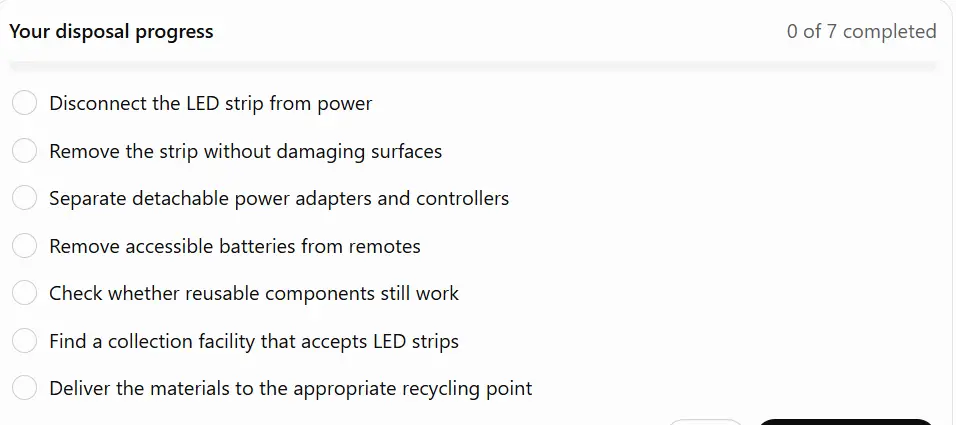
Interactive LED Strip Disposal Checklist
Use this quick checklist when removing and disposing of your lights.
Final Verdict: What Is the Best Way to Dispose of LED Strip Lights?
The best overall approach is to reuse working LED strips when they are safe, and recycle unwanted or broken strips through an appropriate electronics recycling program.
- Best option: Electronics recycling
Suitable for damaged strips, controllers, cables, and power adapters, subject to facility acceptance.
- Best for working strips: Reuse or donation
Extends the useful life of functioning lighting and reduces unnecessary replacement.
- Avoid: Unsorted household disposal
Can waste recoverable materials and may conflict with local electrical waste rules.
LED strip lights may be small, but responsible disposal matters. By safely disconnecting the lighting, separating batteries and reusable accessories, and choosing a suitable recycling program, you can reduce unnecessary electronic waste without making the process complicated.
- Bottom line: Don’t treat an old LED strip like ordinary packaging or a conventional light bulb. Treat it as a small electronic device, and check your local collection rules before disposal.
READ ALSO: The Mid Brisbane Rivercare Program
